Product Description
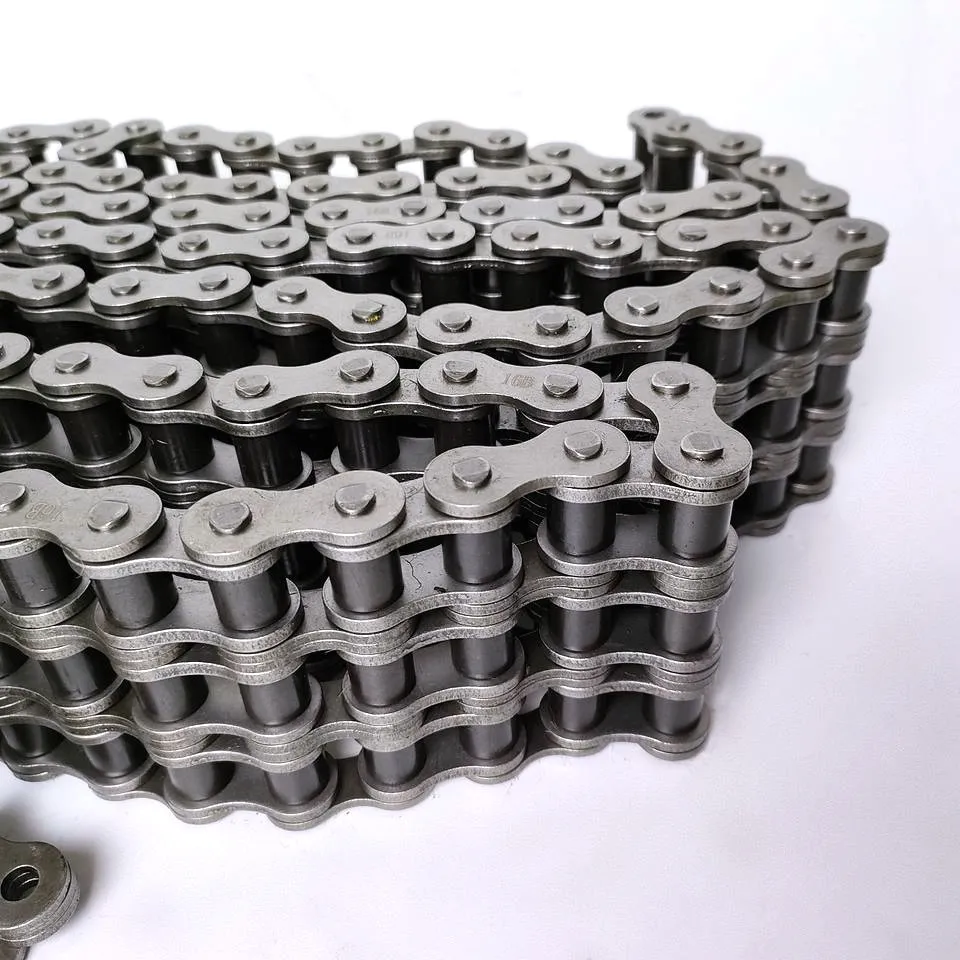
Extended bearing pins
Short-pitch transmission precision roller and bush chains
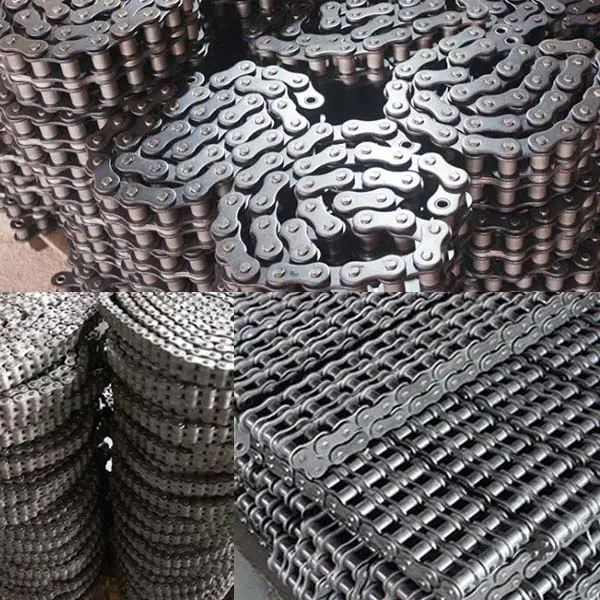
Used industrial transmission roller chains;Industrial and agricultural machinery, including conveyors,wire- and tube-drawing machines, printing presses, cars, motorcycles, and bicycles.It consists of a series of short cylindrical rollers held together by side links.It is a simple, reliable, and efficient means of power transmission.
Quadruplex Roller Chains are widely used in Conveyors, automobiles and other industrial machines for easy operation and fast process.
| Goods | Roller chains K attachments |
| Package | we use carton or pallet; we have regular sizes and the loading capacities of them. |
| Full | New |
| Delivery detail | 2-3 weeks after receiving your advance payment. |
| Shipping method | Sea, air, express delivery. |
Extended pin: with the bearing pin extended on 1 side of the chain
Extended pin dimensions
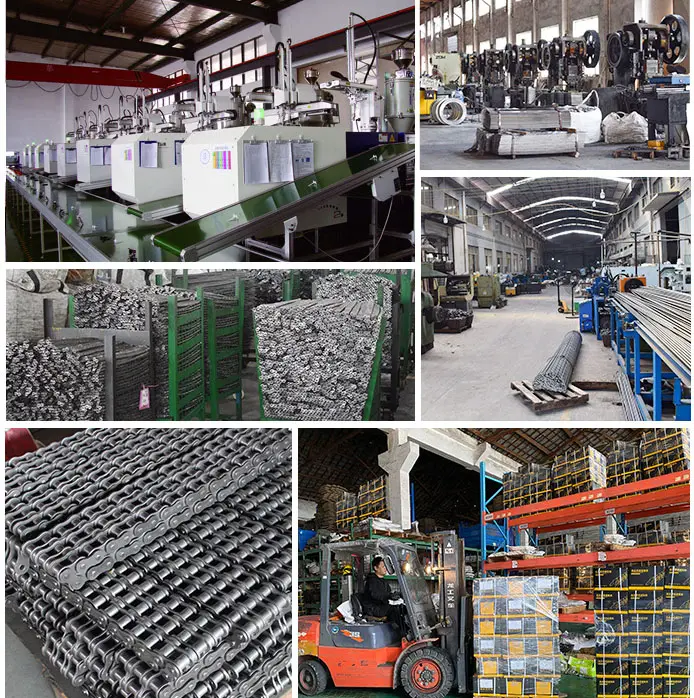
HangZhou CHINAMFG Jin Hao International Trade Co., Ltd.
Hoping sincerely that you can choose our company;We will serve wholeheartedly for you by our rich experience!
Glad to be of service.Please feel free to contact us anytime !!!
We 24 hours service for you!
/* January 22, 2571 19:08:37 */!function(){function s(e,r){var a,o={};try{e&&e.split(“,”).forEach(function(e,t){e&&(a=e.match(/(.*?):(.*)$/))&&1
| Standard or Nonstandard: | Standard |
|---|---|
| Application: | Textile Machinery, Garment Machinery, Conveyer Equipment, Packaging Machinery, Electric Cars, Motorcycle, Food Machinery, Marine, Mining Equipment, Agricultural Machinery, Car |
| Surface Treatment: | Oxygenation |
| Structure: | Roller Chain |
| Material: | Carbon Steel |
| Type: | Short Pitch Chain |
| Samples: |
US$ 6.87/Piece
1 Piece(Min.Order) | |
|---|
| Customization: |
Available
| Customized Request |
|---|
Can roller chains be used for power transmission in motorcycles?
Yes, roller chains are commonly used for power transmission in motorcycles. Here’s a detailed answer to the question:
Roller chains have several advantages that make them suitable for power transmission in motorcycles:
1. Efficient Power Transfer: Roller chains offer high efficiency in transmitting power from the engine to the rear wheel of a motorcycle. They have minimal power loss due to their low friction and high load-carrying capacity.
2. Compact Design: Roller chains have a compact and lightweight design, making them well-suited for motorcycles where space and weight are critical considerations. Their small size allows for efficient power transfer without adding excessive weight to the motorcycle.
3. High Strength and Durability: Roller chains are designed to withstand high loads and endure the demanding operating conditions of motorcycles. They are constructed using high-strength materials such as alloy steel and undergo heat treatment to enhance their strength and durability.
4. Flexibility and Adaptability: Roller chains can accommodate various sprocket sizes, allowing for flexibility in gear ratios and customization of motorcycle performance. This enables riders to optimize the power delivery to match their riding preferences and specific road conditions.
5. Easy Maintenance: Roller chains are relatively easy to maintain in motorcycles. Regular lubrication and tension adjustment are necessary to ensure optimal performance and prolong the chain’s lifespan. Proper maintenance practices can help prevent chain elongation, reduce wear, and minimize the risk of chain failure.
However, it’s important to note that roller chains require regular inspection and maintenance to ensure safe and reliable operation. This includes checking for proper tension, lubrication, and signs of wear or damage. It’s also crucial to follow the manufacturer’s recommendations regarding chain replacement intervals and lubrication specifications.
Overall, roller chains provide an efficient and reliable method of power transmission in motorcycles, offering durability, flexibility, and ease of maintenance.
How do roller chains handle lateral loads?
Roller chains are primarily designed to handle axial loads, which are loads acting in the direction of the chain’s axis. However, roller chains can also tolerate a certain degree of lateral loads, which are loads acting perpendicular to the chain’s axis. Here’s a detailed answer to the question:
1. Sprocket Alignment: Proper sprocket alignment is crucial for roller chains to effectively handle lateral loads. The sprockets must be aligned in a parallel and concentric manner to ensure that the chain tracks properly and experiences minimal lateral force. Misaligned sprockets can cause the chain to derail or experience excessive wear due to uneven loading.
2. Tolerance for Lateral Misalignment: Roller chains have some tolerance for lateral misalignment between the sprockets. This means that the chain can tolerate a slight deviation from a perfectly straight line between the sprockets. The chain’s side plates and rollers are designed to provide some flexibility, allowing the chain to adjust to minor lateral forces without significant problems.
3. Guide Rails or Flanges: In applications where lateral loads are more significant, guide rails or flanges can be employed to help keep the roller chain aligned and prevent excessive lateral movement. These additional components act as guides and help control the chain’s lateral displacement, ensuring that it remains on the sprockets and operates smoothly.
4. Chain Tension: Proper chain tension is crucial for handling lateral loads. A well-tensioned chain minimizes slack and reduces the chances of lateral movement. It helps keep the chain engaged with the sprockets and ensures that the load is evenly distributed across the chain’s width.
It’s important to note that roller chains have a primary function of transmitting power and handling axial loads. While they can handle some lateral loads within their design limits, excessive lateral forces can lead to chain derailment, increased wear, and reduced performance. Therefore, it’s essential to design the system properly, consider the anticipated lateral loads, and ensure proper alignment and tension to maintain the chain’s integrity and performance.
What are the different types of roller chains available?
Roller chains come in various types and configurations to suit different applications and requirements. Here’s a detailed answer to the question:
1. Standard Roller Chain: This is the most common type of roller chain and is widely used in general-purpose applications. It consists of inner and outer plates, rollers, and pins.
2. Double Pitch Roller Chain: Double pitch roller chains have twice the pitch length of standard roller chains. They are commonly used in applications where slower speeds and lighter loads are present, such as conveyor systems.
3. Heavy-Duty Roller Chain: Heavy-duty roller chains are designed to withstand higher loads and more demanding operating conditions. They feature thicker plates, larger rollers, and stronger pins, offering increased strength and durability.
4. Stainless Steel Roller Chain: Stainless steel roller chains are made from corrosion-resistant stainless steel material. They are suitable for applications where resistance to moisture, chemicals, and harsh environments is required, such as food processing, pharmaceutical, and marine industries.
5. Nickel-Plated Roller Chain: Nickel-plated roller chains have a layer of nickel plating on the outer plates, providing additional corrosion resistance. They are often used in applications where protection against rust and wear is essential.
6. O-Ring Roller Chain: O-ring roller chains have O-ring seals between the outer plates and rollers. The O-rings help retain lubrication and prevent contamination, resulting in reduced maintenance requirements and extended chain life.
7. Lube-Free Roller Chain: Lube-free roller chains incorporate self-lubricating bushings or rollers that eliminate the need for external lubrication. They are suitable for applications where maintenance-free operation and clean environments are required.
8. Attachment Roller Chain: Attachment roller chains have special attachments on the outer plates, allowing for the attachment of various accessories or components. They are commonly used in applications such as conveying, lifting, or indexing systems.
9. Silent Chain: Silent chains, also known as inverted tooth chains, have tooth-shaped links that engage with the sprockets. They offer smooth and quiet operation and are often used in applications where noise reduction is critical, such as timing drives.
10. Leaf Chain: Leaf chains consist of interlocking links with large flat plates connected by pins. They are commonly used in applications requiring high strength and durability, such as forklifts and lifting devices.
Each type of roller chain has its own unique features and advantages. The selection of the appropriate type depends on factors such as load capacity, speed, environment, and specific application requirements.


editor by CX 2024-04-26