Product Description
Product Description
|
HRSY Roller Chain Profile |
|||
|
Standard: |
ANSI, DIN, ISO |
||
|
Type: |
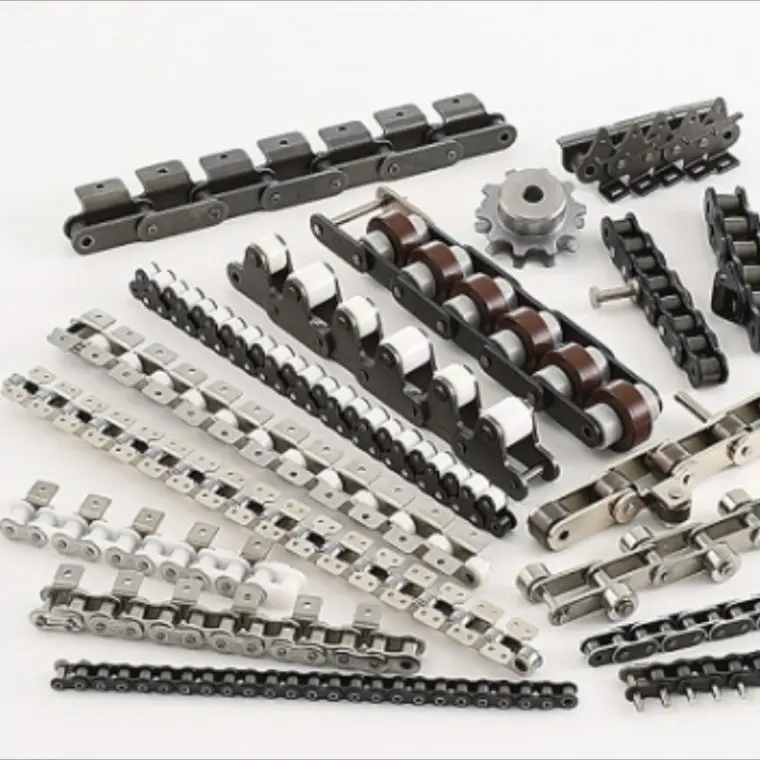
Drive chains, Conveyor chains, Engineering chains, Agricultural chains, Traction chains, Escalator chains |
||
|
Drive chain |
Short pitch precision roller chain (A series, B series, Hevey duty series roller chain) High strength short pitch roller chains Self-lubrication roller chain O-Ring chains Oil filed chains Heavy duty cranked-link transmission chains Double pitch transmission chains Inverted tooth chains Motorcycle chains Other (Driver chains) |
||
|
Conveyor chains |
Conveying roller chains Rubber attached plate chains Printing iron drying room line chains Double hinged conveyor chains Metric (M type) conveyor chains FV series conveyor chains Wooden conveyor chains Chains for food packaging machinery Conveyor chains for paper roll |
||
|
Engineering chains |
Conveying chains for cement industry Scraper conveyor chains Conveyor chains for coal washer Rubber gloves carrier chains Steel sleeve chain for engineering Welded-steel-type mill chains Sugar machine chains Conveyor chains for steel mill |
||
|
Agricultural chains |
Agricultural machinery drive chains Steel pintle chains ZGS38 combine harvester chains Rice harvester chains S type C type Others |
||
|
Traction chains |
Plate chains Leaf chains for sky stacker Traction chains Others |
||
|
Escalator chains |
Escalator step chains Escalator driver chains |
||
|
Material |
40Mn, 45Mn, SS316, SS304, SS201 |
||
|
Advantage |
We have competitive price and high quality. Our stock standard length: 5ft each piece, 10ft each piece. Custom length: We can custom according to your demand. We can accept your Logo, accept ODM, OEM. |
||
Detailed Photos
Packaging & Shipping
Company Profile
ZheJiang Haorongshengye Electrical Equipment Co., Ltd.
1. Was founded in 2008
2. Our Principle:
“Credibility Supremacy, and Customer First”
3. Our Promise:
“High quality products, and Excellent Service”
4. Our Value:
“Being Honesty, Doing the Best, and Long-lasting Development”
5. Our Aim:
“Develop to be a leader in the power transmission parts industry in the world”
|
6.Our services: |
1).Competitive price |
|||
|
2).High quality products |
||||
|
3).OEM service or can customized according to your drawings |
||||
|
4).Reply your inquiry in 24 hours |
||||
|
5).Professional technical team 24 hours online service |
||||
|
6).Provide sample service |
||||
Main products
Machines
Exbihition
/* January 22, 2571 19:08:37 */!function(){function s(e,r){var a,o={};try{e&&e.split(“,”).forEach(function(e,t){e&&(a=e.match(/(.*?):(.*)$/))&&1
| Standard or Nonstandard: | Standard |
|---|---|
| Application: | Textile Machinery, Garment Machinery, Conveyer Equipment, Packaging Machinery, Electric Cars, Motorcycle, Food Machinery, Marine, Mining Equipment, Agricultural Machinery, Car |
| Surface Treatment: | Oil Blooming |
| Samples: |
US$ 50/Meter
1 Meter(Min.Order) | Order Sample |
|---|
| Customization: |
Available
| Customized Request |
|---|
.shipping-cost-tm .tm-status-off{background: none;padding:0;color: #1470cc}
|
Shipping Cost:
Estimated freight per unit. |
about shipping cost and estimated delivery time. |
|---|
| Payment Method: |
|
|---|---|
|
Initial Payment Full Payment |
| Currency: | US$ |
|---|
| Return&refunds: | You can apply for a refund up to 30 days after receipt of the products. |
|---|
What are the maintenance intervals for roller chains?
Maintenance intervals for roller chains can vary depending on several factors, including the specific application, operating conditions, and manufacturer’s recommendations. Here’s a detailed answer to the question:
1. Lubrication: Proper lubrication is essential for the smooth operation and longevity of a roller chain. Lubrication intervals depend on the type of lubricant used, the chain’s speed, and the operating conditions. In general, it is recommended to lubricate the chain every 200-300 miles or as specified by the motorcycle manufacturer.
2. Tension Adjustment: Chain tension should be checked regularly and adjusted as needed to maintain optimal performance. Over time, roller chains can elongate due to wear, which affects their tension. It is recommended to check the chain tension every 500-1,000 miles or as advised by the motorcycle manufacturer.
3. Inspection: Regular visual inspection of the roller chain is important to identify any signs of wear, damage, or misalignment. Inspect the chain for loose or missing rollers, damaged links, excessive wear on sprockets, and any signs of rust or corrosion. Inspections should be performed at least every 500-1,000 miles or as recommended by the motorcycle manufacturer.
4. Cleaning: Periodic cleaning of the roller chain helps remove dirt, debris, and accumulated grime that can interfere with its performance. Cleaning intervals depend on the riding conditions and the level of contamination. Generally, it is advisable to clean the chain every 1,000-2,000 miles or when it appears visibly dirty.
5. Replacement: Roller chains have a finite lifespan and will eventually require replacement. The replacement interval depends on various factors, including the chain’s quality, usage conditions, and maintenance practices. As a general guideline, roller chains should be replaced when they become excessively worn, elongated beyond the manufacturer’s specifications, or show signs of damage that compromise their integrity.
It’s important to note that the maintenance intervals provided here are general guidelines, and it is crucial to refer to the motorcycle manufacturer’s specific recommendations for the roller chain used in your motorcycle. Adhering to the manufacturer’s guidelines and performing regular maintenance can help ensure the roller chain’s optimal performance, reliability, and longevity.
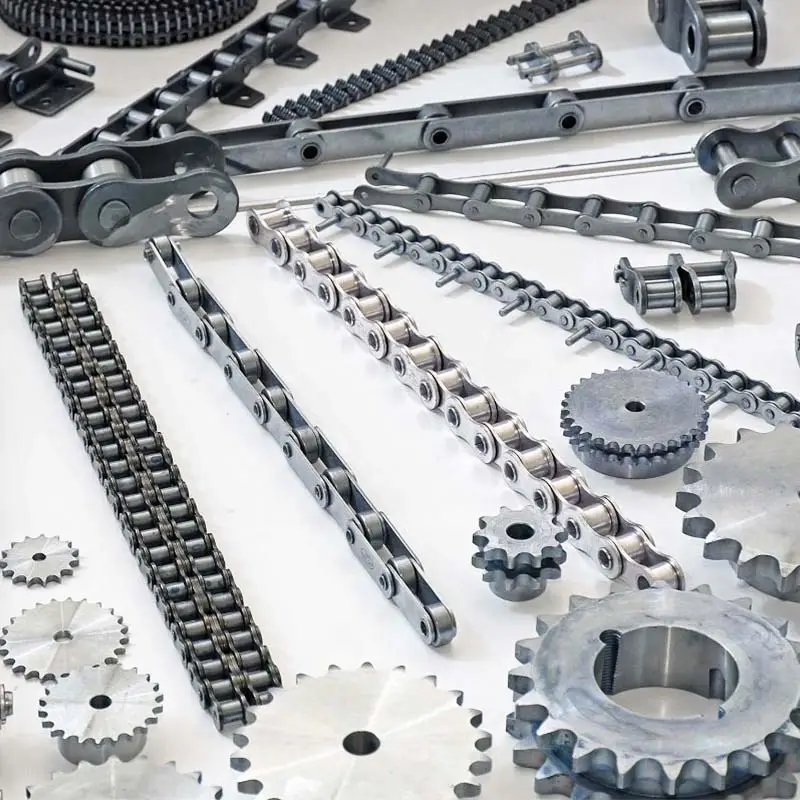
What are the benefits of using a roller chain in material handling systems?
Roller chains offer several benefits when used in material handling systems. Here’s a detailed answer to the question:
1. High Load Capacity: Roller chains are designed to handle heavy loads. They have the strength and durability to support the weight of materials being transported in material handling systems. The multiple contact points provided by the rollers distribute the load evenly, reducing stress concentrations and ensuring efficient load carrying.
2. Reliable Power Transmission: Roller chains provide reliable power transmission in material handling systems. They efficiently transfer power from the motor to the moving components, such as conveyors, lifts, and sorting systems. The precision engineering of roller chains ensures smooth and consistent power transfer, minimizing slippage and maximizing operational efficiency.
3. Flexibility and Versatility: Roller chains are available in various sizes, pitches, and configurations, offering flexibility in design and application. They can be easily adapted to different material handling system layouts and requirements. Roller chains can accommodate both horizontal and vertical movements, making them suitable for a wide range of material handling applications.
4. Durability and Longevity: Roller chains are known for their durability and resistance to wear. They are designed to withstand the demanding operating conditions typically encountered in material handling systems, such as high speeds, heavy loads, and exposure to dust, debris, and contaminants. Proper lubrication and maintenance can further enhance their longevity and reliability.
5. Easy Maintenance: Roller chains are relatively easy to maintain. Regular lubrication and periodic inspection can help ensure smooth operation and detect any signs of wear or damage. Chain tension can be easily adjusted to maintain optimal performance. In the event of chain wear or failure, individual chain links can be replaced, minimizing downtime and maintenance costs.
6. Cost-Effective Solution: Roller chains offer a cost-effective solution for power transmission in material handling systems. They are generally more affordable compared to alternative systems such as belts or gears. Additionally, their durability and longevity reduce the need for frequent replacements, resulting in cost savings over the system’s lifespan.
When selecting a roller chain for a material handling system, factors such as load capacity, speed, environmental conditions, and specific application requirements should be considered. Regular maintenance and inspection are essential to ensure optimal performance and to identify any potential issues that may require attention.
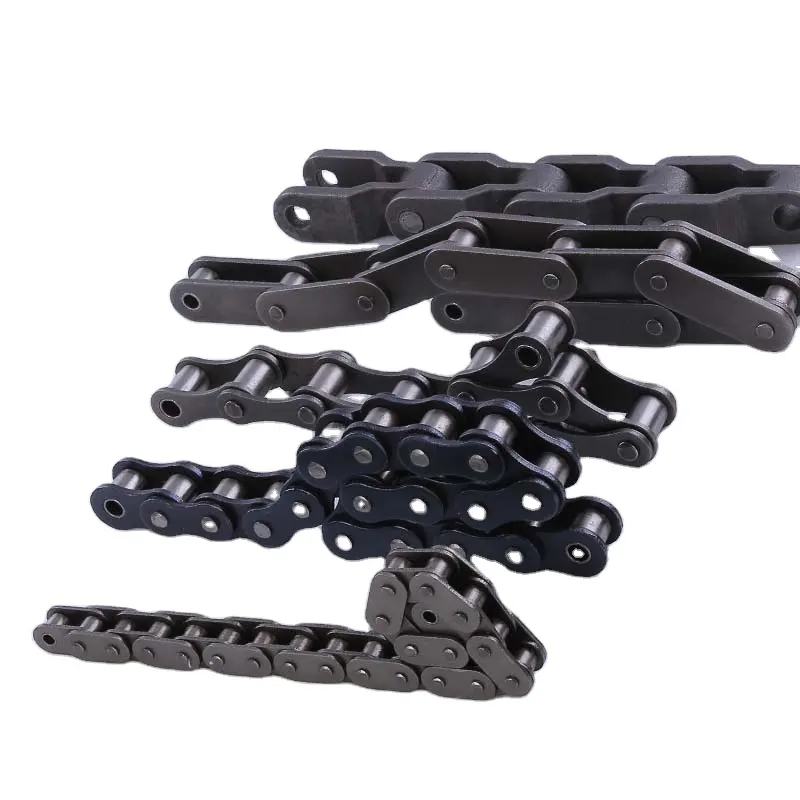
How do roller chains handle shock loads?
Roller chains are designed to handle a certain level of shock loads, but their ability to withstand and absorb shocks depends on several factors. Here’s a detailed answer to the question:
1. Chain Design: The design of roller chains includes various elements that contribute to their ability to handle shock loads. These elements include the shape and size of the rollers, the pitch of the chain, and the material used for construction. High-quality roller chains are engineered to provide durability and strength, allowing them to withstand sudden impacts and shocks.
2. Material Selection: The choice of materials for roller chains plays a significant role in their ability to handle shock loads. Chains made from high-quality alloy steels or special heat-treated steels offer better toughness and resistance to impact. The material properties, including hardness and tensile strength, are important considerations in determining the chain’s ability to handle shock loads.
3. Chain Tension: Proper chain tension is crucial for handling shock loads effectively. Adequate tension ensures the chain remains engaged with the sprockets during sudden changes in load or direction. Insufficient tension can lead to chain slippage or disengagement, resulting in increased shock loads on the chain links. Regular inspection and adjustment of chain tension help maintain optimal performance.
4. Lubrication and Maintenance: Proper lubrication is essential for reducing friction and wear, especially when dealing with shock loads. Adequate lubrication ensures smooth movement of the chain and minimizes the impact of shocks on the chain’s components. Regular maintenance, including cleaning and relubrication, helps prolong the chain’s lifespan and ensures its ability to handle shock loads.
While roller chains are designed to handle a certain level of shock loads, it is important to consider the specific requirements of the application. In situations where high shock loads are expected, additional measures such as using shock-absorbing devices, selecting chains with higher load capacities, or implementing buffering systems may be necessary to protect the chain and ensure reliable operation.


editor by CX 2024-05-07