DHA Roller Chain Technical Knowledge
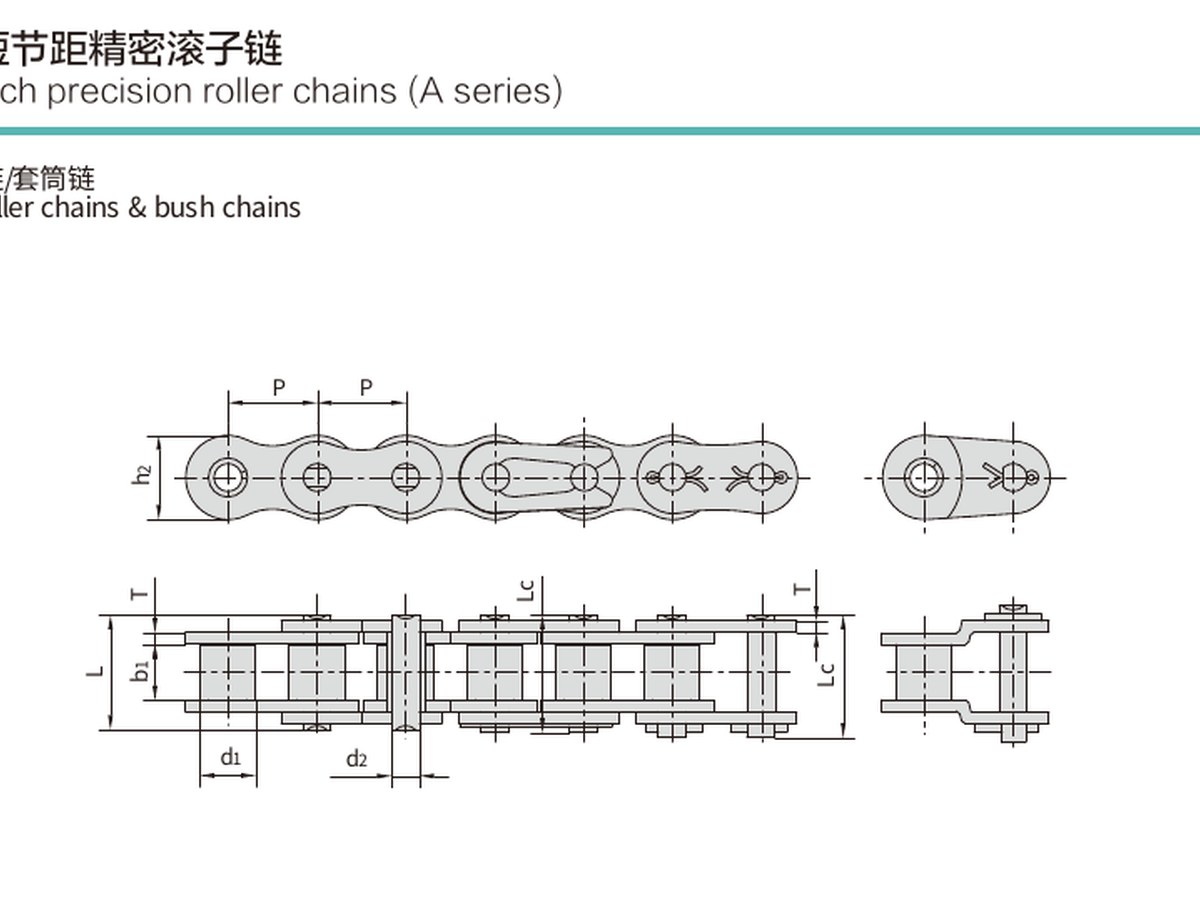
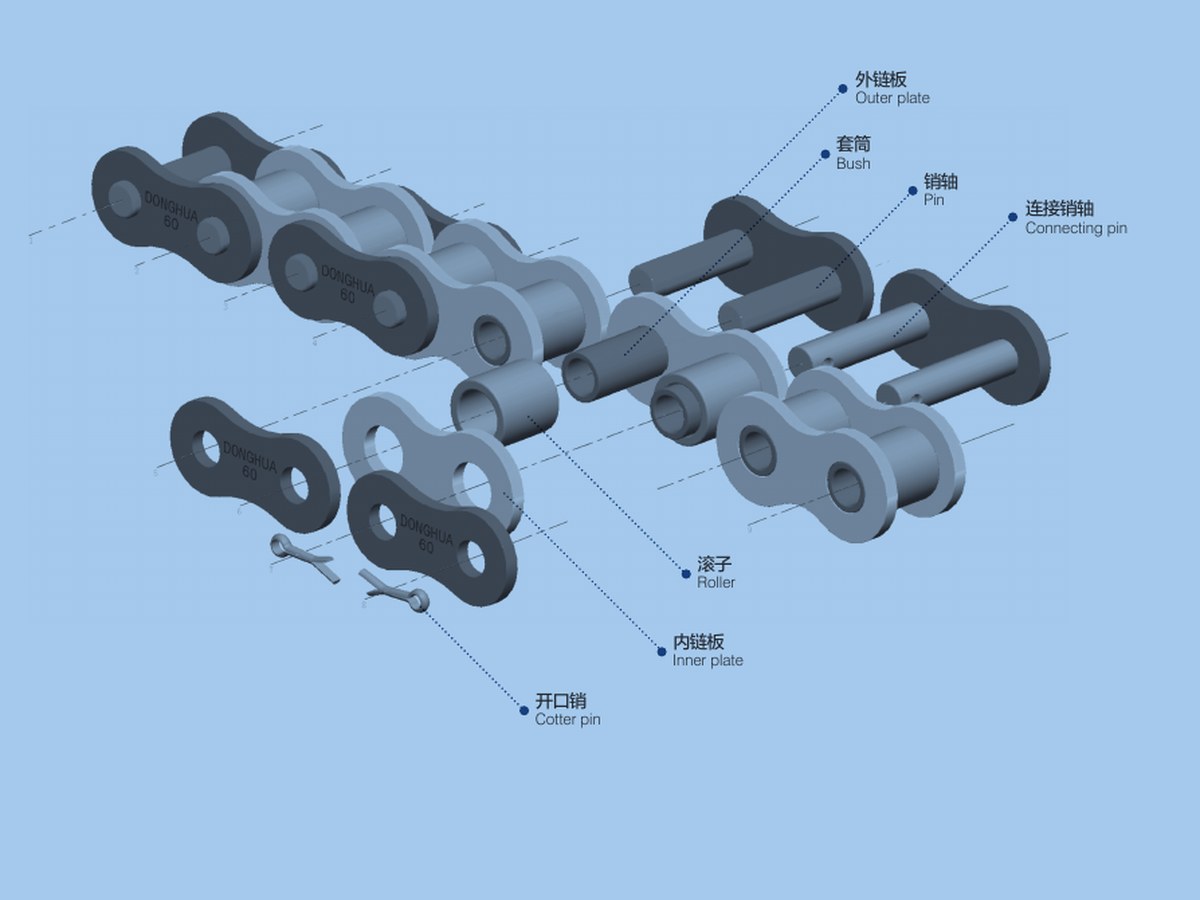
A roller chain is a system of pins, bushes, rollers and plates articulating around a matched sprocket. The 2017 chain catalogue illustrates those components and lists dimensional data such as pitch, roller diameter, inner width, pin diameter, plate height and thickness. Those measurements are the starting point for replacement engineering.
Core chain dimensions
Pitch
Pitch is the centre-to-centre distance between adjacent pins. It is the first identifier, but not enough on its own to confirm interchangeability.
Roller diameter & inner width
These dimensions govern the interface with sprocket teeth and the available space between inner plates.
Pin and plate geometry
Pin diameter, plate height and plate thickness influence joint geometry, strength and the physical envelope of the chain.
Why the pin-bush joint is important
Every articulation cycle creates sliding motion between pin and bush. Fine hard particles, degraded lubricant or restricted lubricant access can accelerate joint wear. DHA-style hard surface treatment is therefore most relevant when the wear mechanism is concentrated at that joint rather than being dominated by corrosion or another failure mode.
Chain and sprocket should be evaluated together
A new chain running on worn or hooked teeth can experience poor engagement and uneven load sharing. Confirm tooth count, pitch, bore, hub geometry, alignment and tooth condition. Product pages link the chain to EP-SP matched sprocket families so both components can be reviewed in one enquiry.
Manufacturing and inspection considerations
Material preparation
Chain production begins with controlled plate and bush material before individual components are formed.
Component forming
The source catalogue shows continuous strip processing, roller cold extrusion and specialised tooling as part of chain-component manufacture.
Heat treatment & surface condition
Heat treatment and surface engineering are used to balance component hardness, wear behaviour and fatigue requirements.
Assembly & inspection
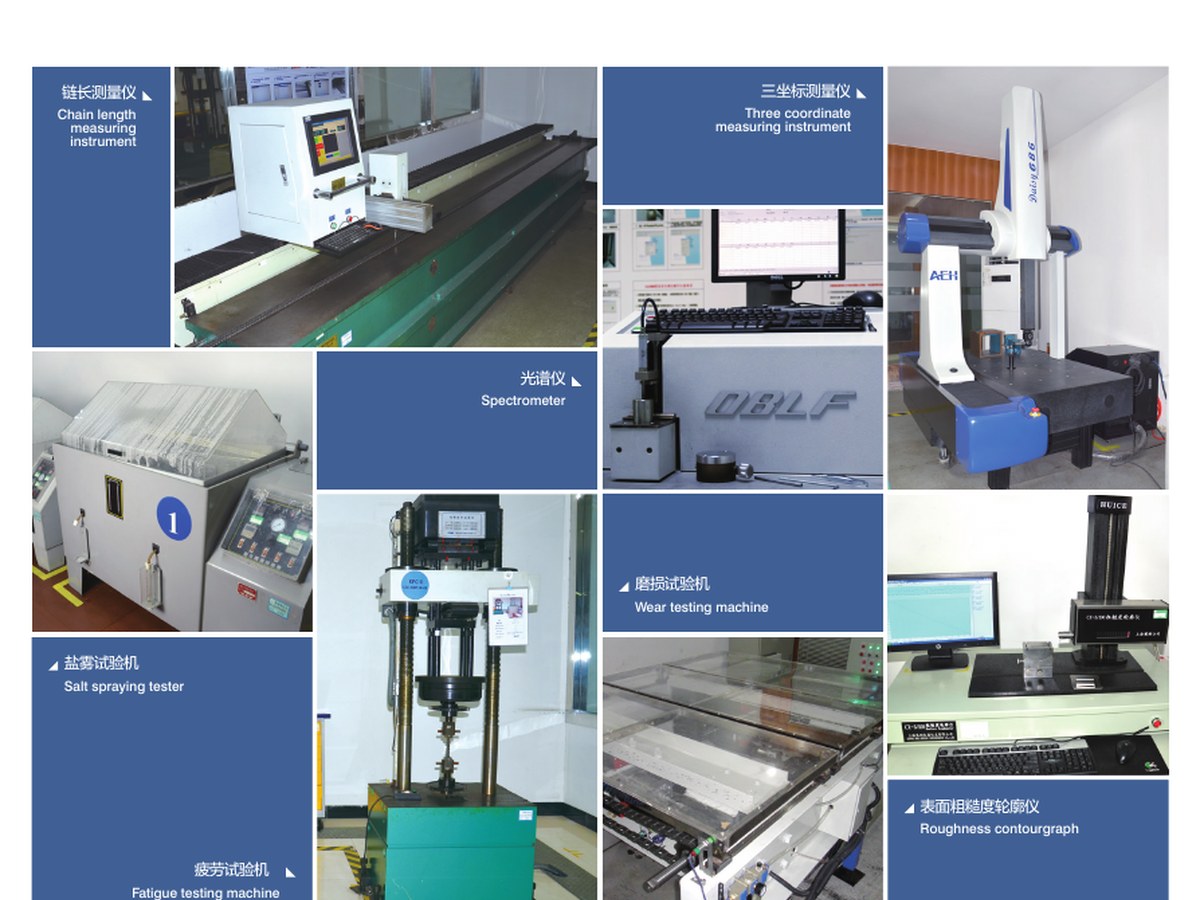
Dimensional measurement, wear testing, fatigue testing, chain-length measurement and surface-condition inspection are relevant quality tools.
Lubrication and maintenance
The source catalogue includes dedicated appendix sections for power selection, lubrication selection and roller-chain drive maintenance. In service, lubricant must reach the articulating joint. Maintenance should also track elongation, sprocket tooth profile, alignment, unusual noise, contamination and guard condition.
Technical questions
Can pitch alone identify a roller chain?
No. Pitch is essential, but inner width, roller diameter, pin diameter, plate dimensions and strand count should also be checked.
When should sprockets be replaced with the chain?
When teeth are hooked, visibly worn, damaged or no longer engage evenly. Alignment and bore condition also need review.
Is DHA always the right choice for a harsh environment?
No. Abrasive joint wear, corrosion, wash-down, temperature and lubricant availability are different problems and may require different chain architectures.
Customer Reviews & Case Studies
Machine building
Use: Replacement chain assessment.
Engineering note: Measuring the full chain envelope avoided a pitch-only substitution.
Application fit ★★★★★
Machine tools
Use: Compact auxiliary drive.
Engineering note: Pin, roller and plate dimensions were checked against guard and sprocket clearances.
Application fit ★★★★★
Material handling
Use: Conveyor maintenance.
Engineering note: Chain elongation and sprocket tooth condition were monitored together.
Application fit ★★★★☆